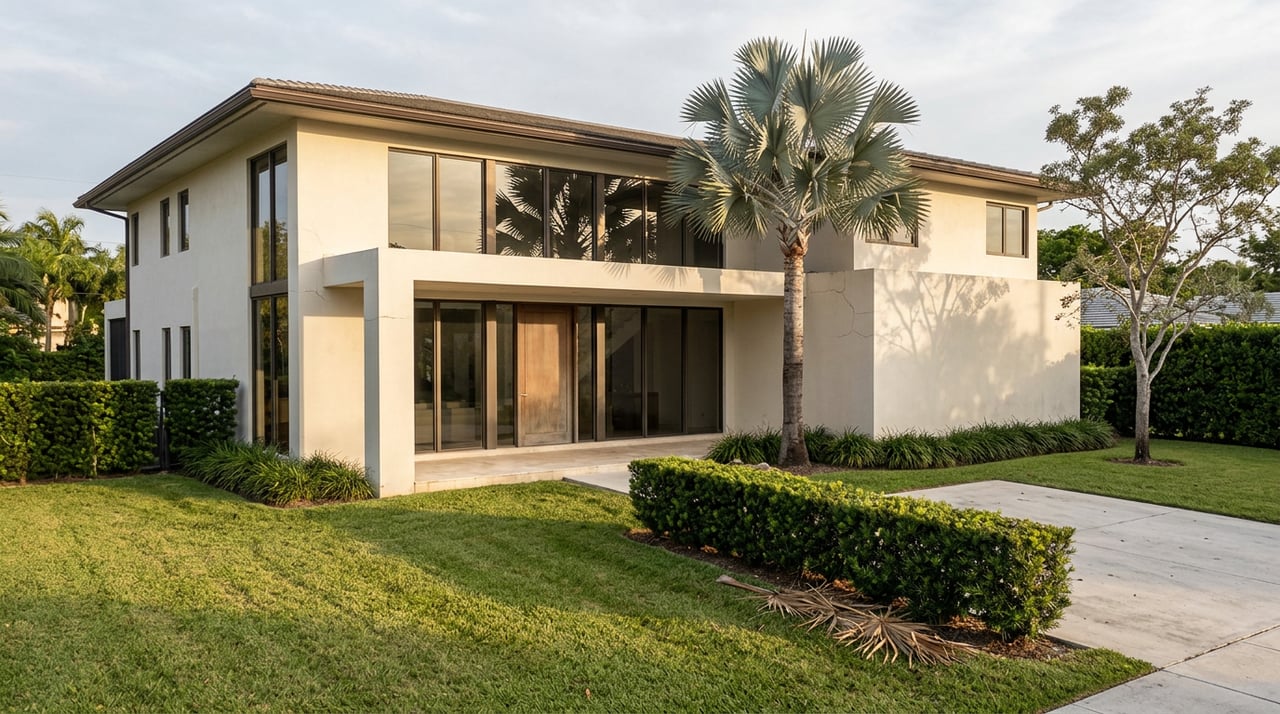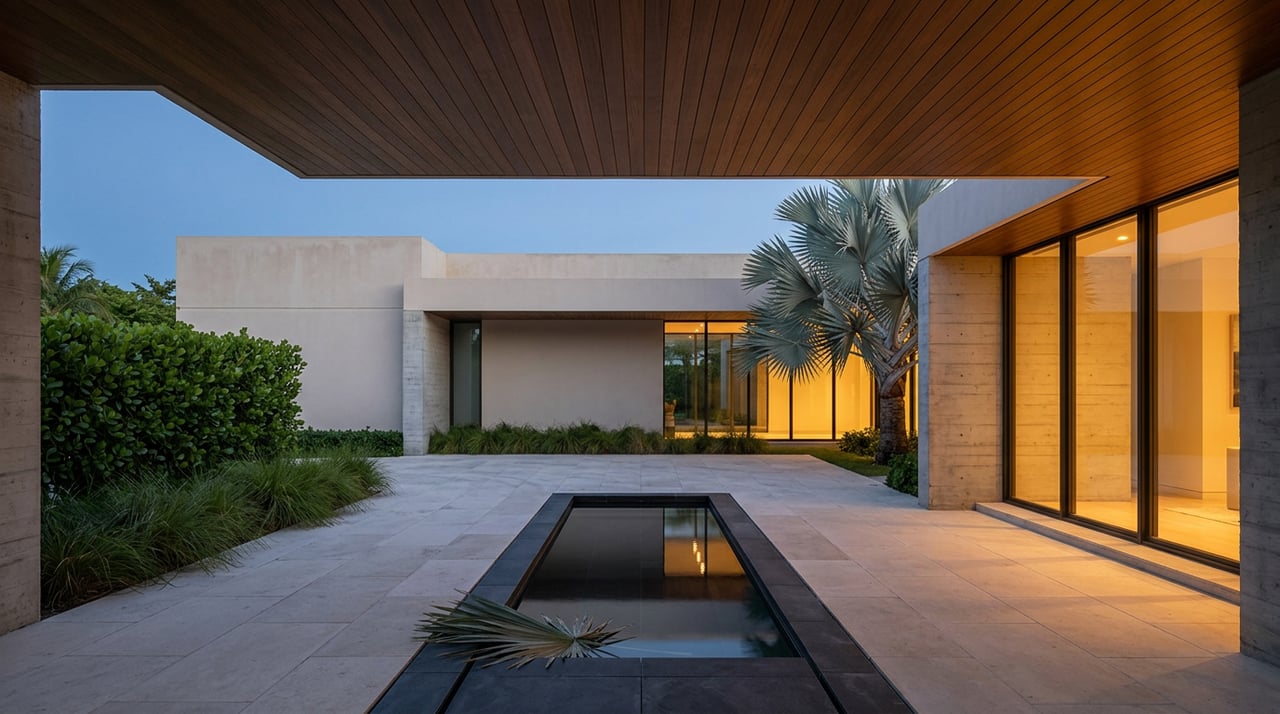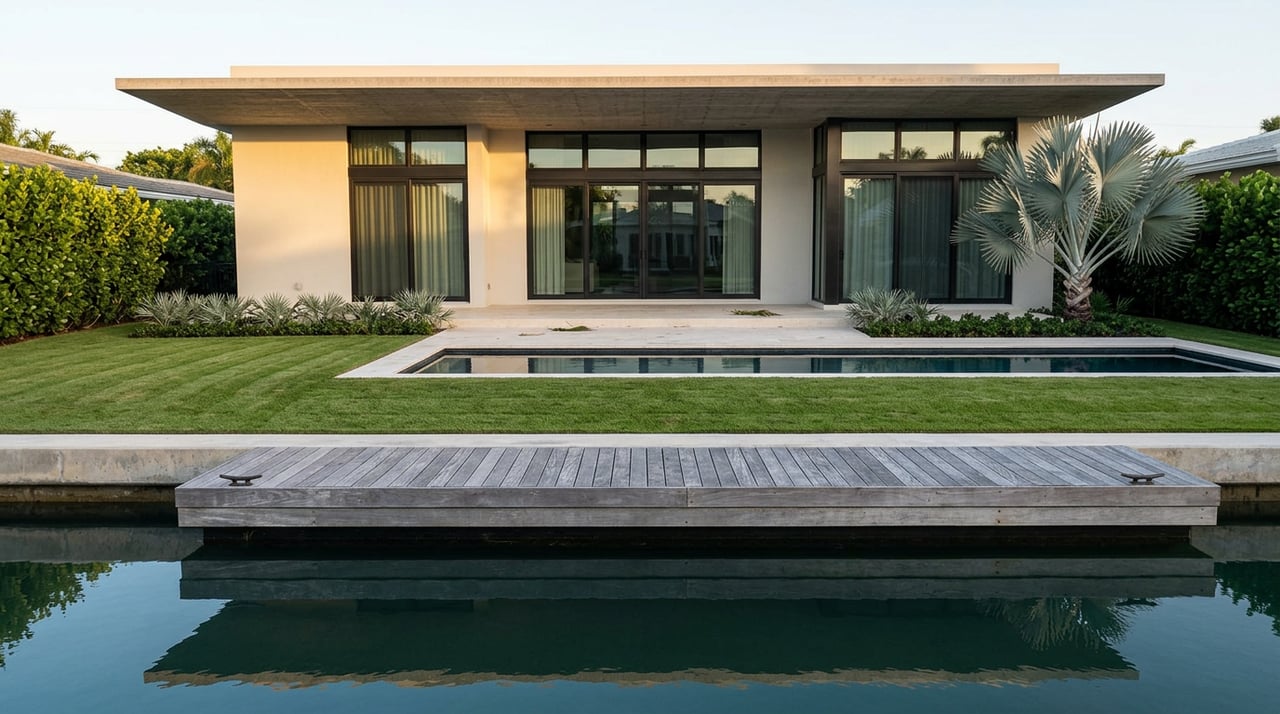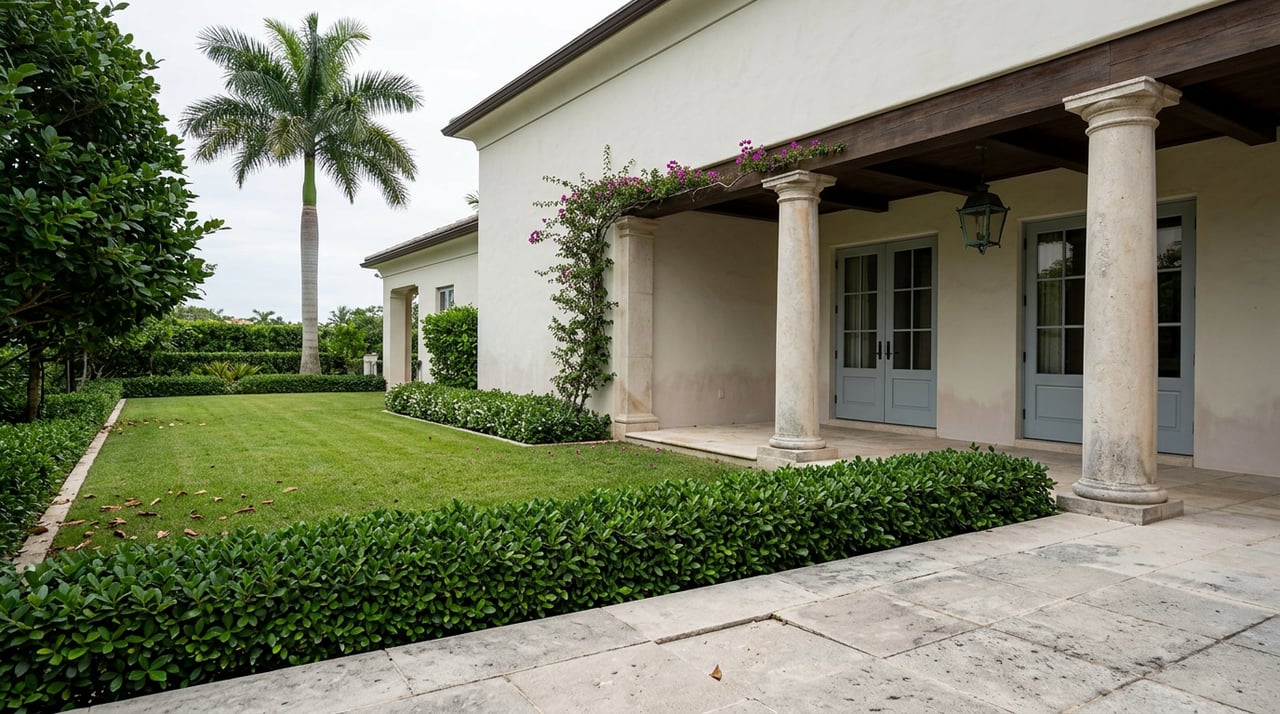
In May 2026, the Palm Beach Town Council voted to landmark a century-old bungalow at 141 Chilean Avenue over its owner's formal objection. The vote split 2 to 2 before Mayor Danielle Moore broke the tie. The owner, a corporation that had held the property for roughly three decades, argued through counsel that the house did not meet the ordinance's criteria for historical significance or architectural distinction. The council disagreed, and under the town's landmarks ordinance, an owner's opposition does not stop a designation from taking effect.
Nobody involved in that vote was buying a $30 million oceanfront trophy. It was a modest house on a residential street, which is exactly why the case matters to anyone shopping the island right now. If a bungalow that predates most of Palm Beach's zoning code can be pulled into landmark status against its owner's wishes, then the regulatory track underneath any given address is not something a buyer can assume from the price tag or the square footage. It has to be checked, parcel by parcel, before an offer goes in.
The Number Every Listing Skips
At any given time, roughly 80 significant single-family projects are working their way through permitting on the island of Palm Beach. Fewer than half of them deliver on the timeline the owner originally set. The gap almost never traces back to a framing crew running behind or a supply shortage on windows. It traces back to the Town's Architectural Commission, known locally as ARCOM, and to owners who did not understand what the commission actually evaluates until they were already several months into the process.
Premier Estate Properties broker Jim McCann has described how the pressure on that commission built after 2020.
"We had what I thought was a healthy market, and then COVID hit, and everything went ballistic."
New buyers with new capital wanted to move fast on renovations, from full teardowns to modest additions. ARCOM's docket got longer. The review pace did not.
What Actually Sets the Clock
ARCOM is a seven-member board with three alternates, all registered Palm Beach voters appointed by the Town Council. At least two and up to three members must be licensed architects, and one of those must also be a licensed landscape architect or master gardener. Its job is to review the exterior of any new construction or substantial alteration visible from a public right of way, which on this island includes far more than most buyers expect.
A recent Town of Palm Beach planning page lays out how the review splits depending on the parcel: non-landmarked properties go through ARCOM, while landmarked or historically significant buildings go through the separate Landmarks Preservation Commission instead. A recent ARCOM agenda shows the range of projects that pass through the same process regardless of scale. New single-family applications appeared for addresses including 230 Plantation Road and 418 Seaspray Avenue, alongside a full renovation and landscape redesign at 1066 North Ocean Boulevard filed by Creekshore LLC. Even a storefront at 259 Worth Avenue seeking approval for new signage, an entry door, and awnings needed a full hearing, and the item was deferred to the commission's June 24, 2026 meeting. On this island, an awning gets the same procedural seriousness as a roofline.
Here is roughly how the sequence runs for a buyer planning a renovation or new build:
| Stage | What happens | Typical duration |
|---|---|---|
| Pre-application and schematic design | Architectural work before anything reaches the Town's planning desk | 4 to 8 weeks |
| Staff preview meeting | Informal session with ARCOM staff that surfaces likely objections early | Varies |
| First ARCOM hearing | Commission votes on preliminary approval or remands for revisions | Each remand adds 4 to 6 weeks |
| Final architectural approval | Detailed elevations, material samples, and window specs reviewed again | 1 to 2 additional hearings common |
| Permit submission and review | Town's Building Division reviews the full construction document set | 12 to 20 weeks |
| Construction | Ground-up build or full renovation on a 6,000 to 10,000 square foot residence | 16 to 22 months |
Layer ARCOM on top of the base permit process and a clean, unremanded custom residence typically needs four to six months from complete design documents to an issued permit, before a shovel touches the ground.
Three Different Regulatory Tracks, One Island
Not every Palm Beach parcel answers to the same set of rules, which is the part that rarely shows up in a listing description. A property outside any historic overlay goes through ARCOM alone. A property inside one of the island's historic districts, which cover parts of Midtown, the Sea Street area, and the El Brillo corridor in the South End, with additional overlay pockets reaching into the North End, answers to the Landmarks Preservation Commission under Chapter 54 of the Town Code instead, or in parallel. An oceanfront parcel adds a third layer: Florida's Coastal Construction Control Line review, which on this island runs in series with ARCOM rather than alongside it, adding another three to five months of dead time before a shovel goes in the ground.
The Town's Historic Preservation Ordinance, adopted in 1979, currently protects more than 328 landmark properties, sites, and vistas. That ordinance does not require an owner's consent to add a new one, as the Chilean Avenue vote showed. It also means a house that is not landmarked today can become one during a buyer's ownership, which changes what future renovations are allowed to touch.
Even developers with deep track records treat ARCOM as a serious variable rather than a formality. Todd Michael Glaser, who paid $85 million for Tarpon Island and $18.5 million for the El Brillo Way estate once owned by Jeffrey Epstein before demolishing it, has said publicly that the process can be discouraging even for someone with his experience, including a preservation award from the Town's own Preservation Foundation for a separate restoration project. If the review pace tests a buyer who has done this repeatedly, it is worth modeling honestly before a first-time buyer signs a contract.
What This Costs in Real Terms
Historic renovations specifically tend to run 15 to 30 percent higher than comparable work on non-historic properties, with two to six month timeline extensions common. On a $5 million interior-heavy update, that premium is real money, and it lands on the buyer, not the previous owner who sold the house at a price that never accounted for it.
Closing before ARCOM approval is common, and most buyers do it. The tradeoff is that the clock on carrying costs starts at closing, not at permit-in-hand. A buyer who assumes their renovation begins the week they get keys is usually the same buyer who discovers, several months in, that the real start date was always going to be later.
Boca Raton, for comparison, has no town-wide architectural commission. Some of its private communities, including Royal Palm Yacht and Country Club, Woodfield, and Les Jardins, run their own architectural review boards through the homeowners association, but that review sits at the community level rather than the municipal one. A buyer moving between the two markets should not assume the process transfers.
Meanwhile, the capital keeps arriving regardless of how long a renovation takes to clear. Palm Beach Island has posted 118.2 percent appreciation over the past five years, with average home values near $9.8 million and a mid-2025 median single-family sale price around $12.9 million. Nearly 70 percent of first-half 2025 single-family closings on the island cleared $10 million. In the week of August 10 through 16, 2026, buyers signed 13 contracts across Palm Beach County at an average asking price near $7.7 million, or roughly $1,731 per square foot, according to Douglas Elliman's weekly Eklund-Gomes market report. The week before, a Palm Beach estate asking $76 million led 16 signed contracts totaling more than $245 million. None of that changes ARCOM's docket or its pace. The only lever a buyer actually controls is whether they modeled the review timeline honestly before they wrote the offer.
Before You Write the Offer
- Ask which track the parcel sits on: ARCOM alone, ARCOM plus Landmarks Preservation Commission, or ARCOM plus Coastal Construction Control Line
- Check whether the address falls inside Midtown, the Sea Street area, the El Brillo corridor, or a North End overlay pocket
- Request a staff preview meeting before the parcel is under contract, if the seller or listing agent can make that introduction
- Budget carrying costs from the day of closing, not the day a permit is issued
- Price historic-district work at 15 to 30 percent above a comparable non-historic renovation, with two to six months added to the schedule
A Few Questions Before You Write the Offer
Can I close on a Palm Beach estate before ARCOM approves my renovation plans? Yes, and most buyers do. The tradeoff is that carrying costs during design and review become the buyer's responsibility from the day of closing, not the day a permit is issued.
Does a landmark designation require the owner's agreement? No. The Chilean Avenue case in May 2026 showed that Town Council can designate a property over the owner's formal objection, and once designated, any exterior change visible from the street needs Landmarks Preservation Commission approval regardless of whether the designation was welcomed.
Is Boca Raton's review process similar? Not at the town level. Boca Raton has no town-wide architectural commission, though HOA-based architectural review boards inside communities such as Royal Palm Yacht and Country Club, Woodfield, and Les Jardins run their own approval processes for members.
Are off-market estates any easier to renovate? The overlay rules apply the same way regardless of how the property came to market. What off-market timing can offer is the chance to have a pre-application conversation with the Town before the parcel is under contract, which surfaces likely objections while there is still time to adjust the offer.
Modeling a renovation timeline on Palm Beach Island takes more than a contractor's estimate. It takes knowing which commission reviews the parcel, how many hearings a comparable project has needed recently, and what carrying costs look like for the months between closing and a permit in hand. Engel & Völkers Fort Lauderdale works alongside Garcia Signature Properties Group across coastal South Florida, including Palm Beach, and can help a buyer weigh a property's ARCOM exposure before an offer goes in, not after. Contact us to talk through a specific address before you write.