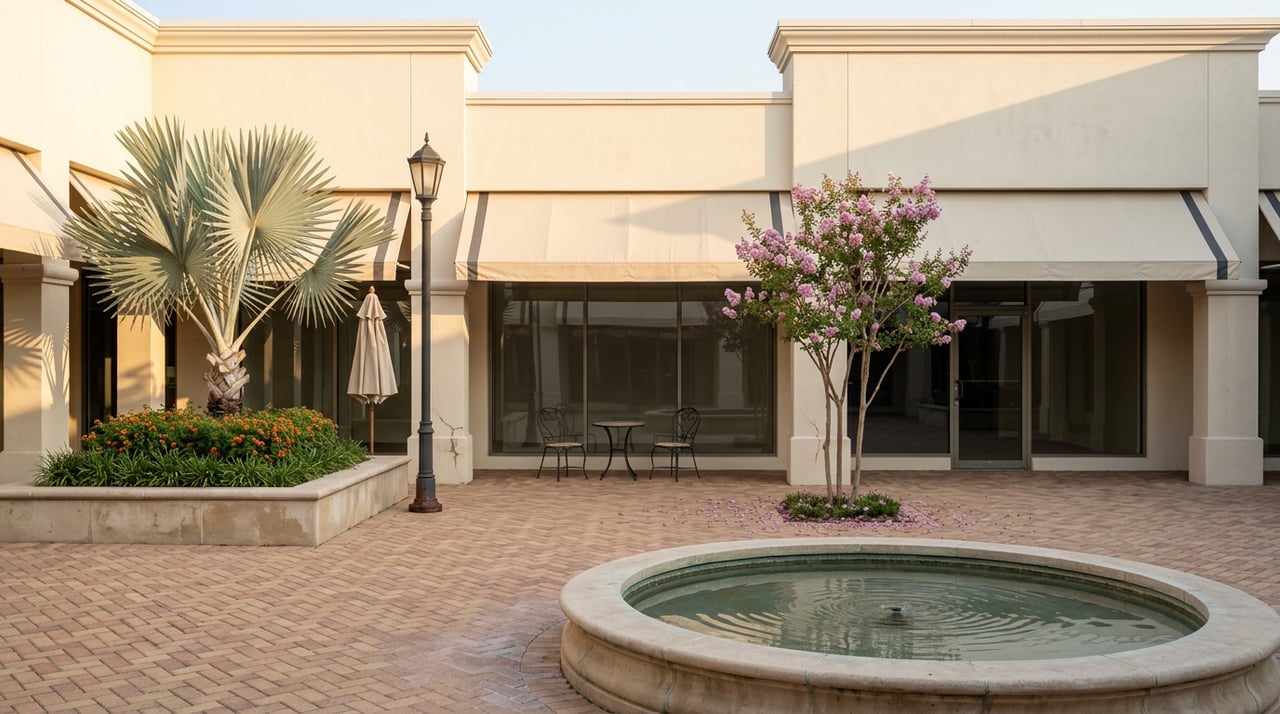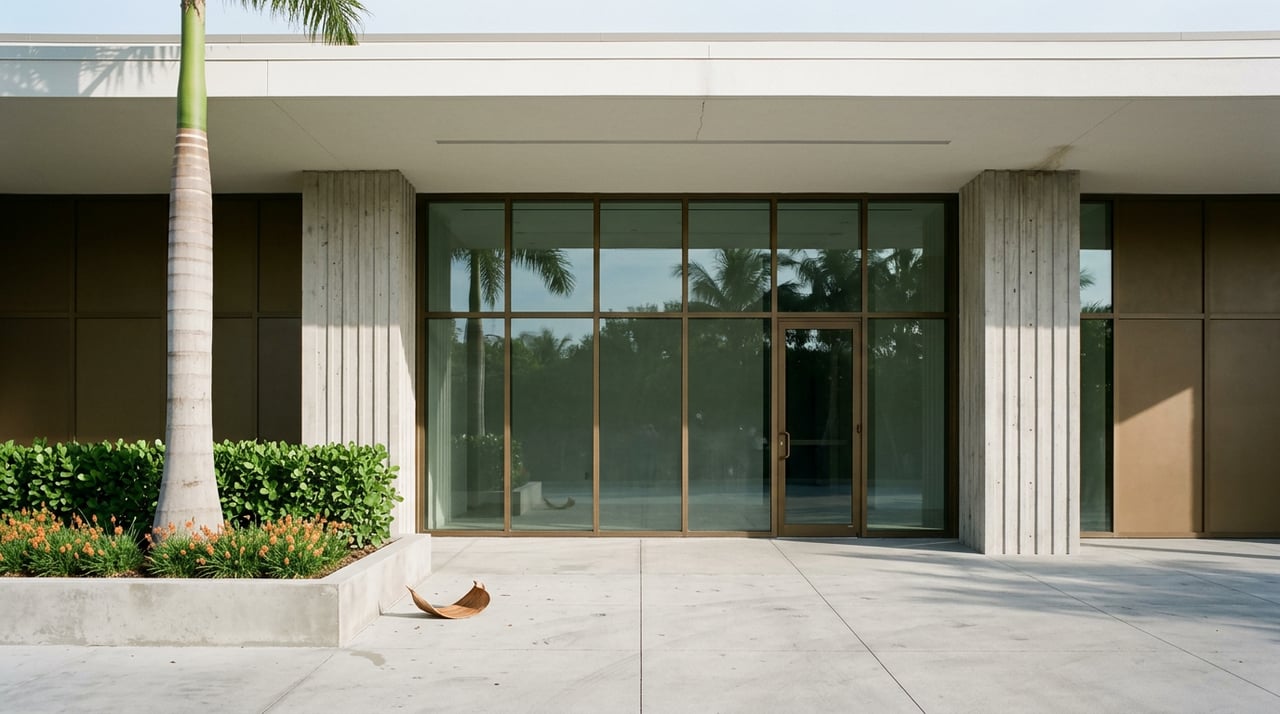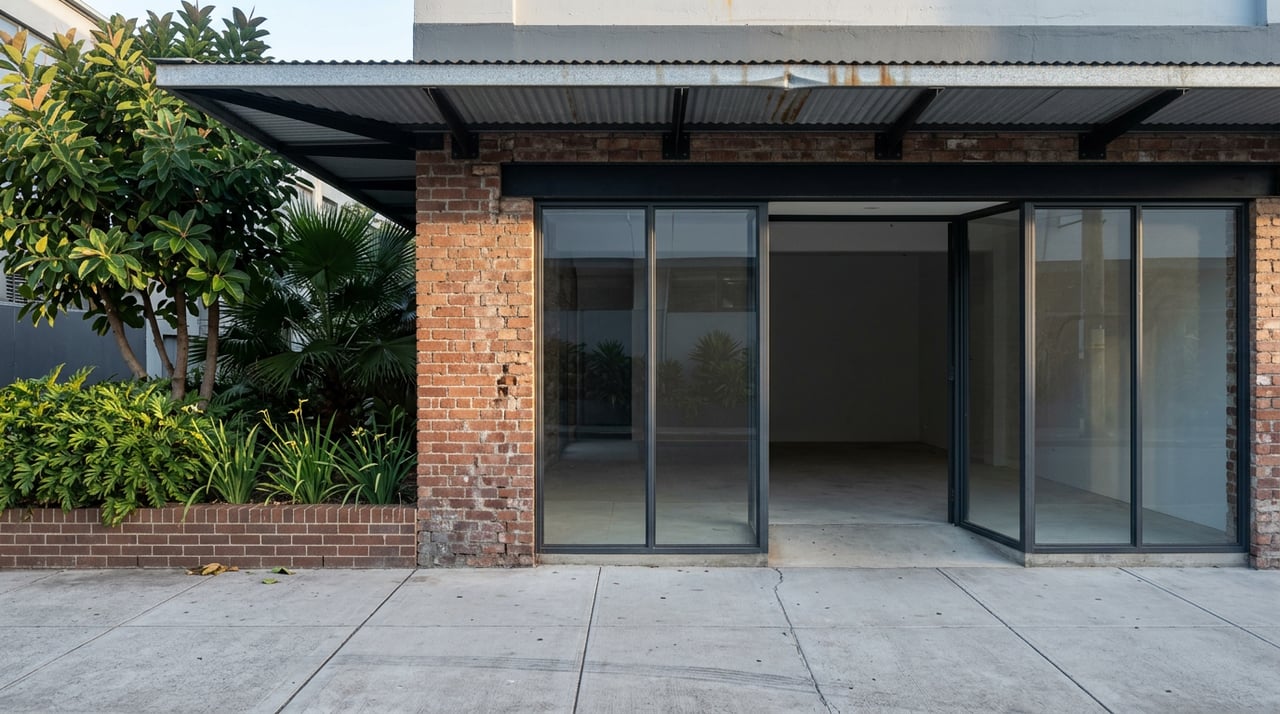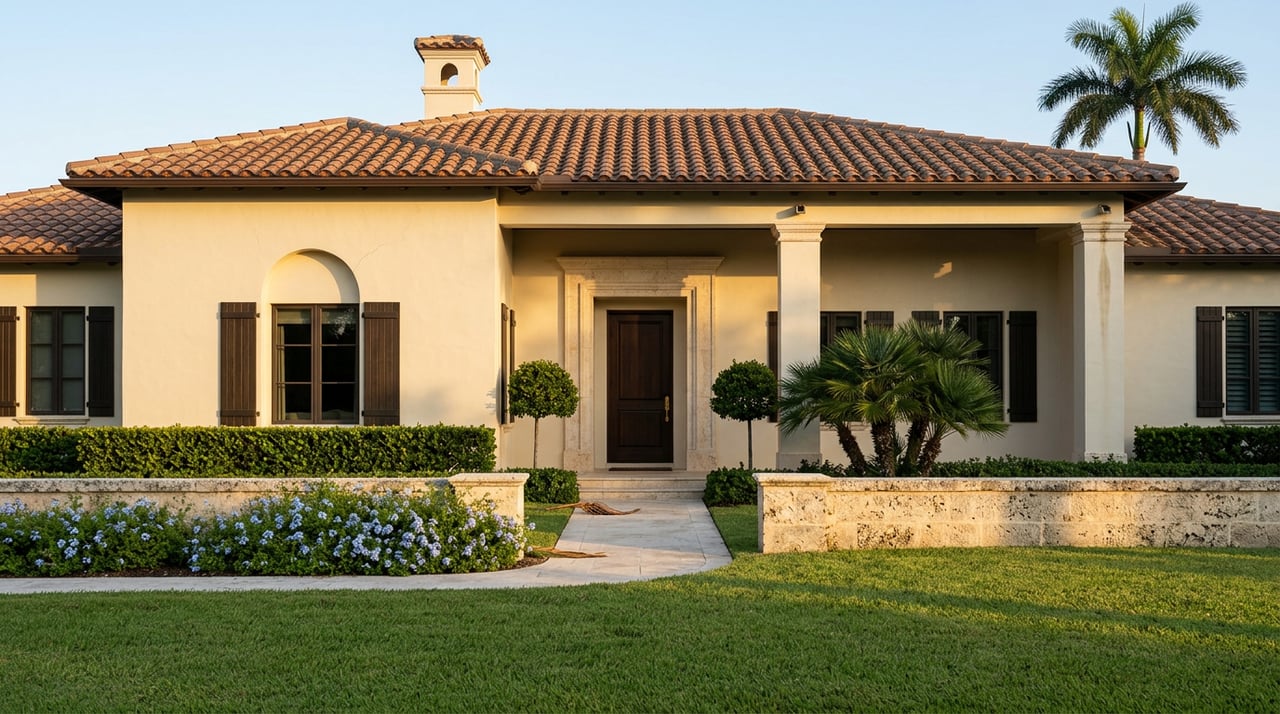
Two Midtown estates list within a mile of each other this year, both around 8,000 square feet, both asking in the mid-teens. A buyer touring them sees comparable lots, comparable finishes, comparable everything. One of them breaks ground within a year of closing. The other is still sitting in front of the Town's seven-member architectural commission eighteen months later, on its third remand, with carry costs stacking against a design that keeps failing on massing.
Nothing in either listing explains the gap. The variable that decides it isn't square footage or price per foot. It's whether the buyer understood, before making an offer, that the house they're purchasing isn't really theirs to redesign until a municipal board says so.
The Money at Stake Makes the Timeline Worth Understanding
Palm Beach Island isn't a market where buyers shrug off a few extra months of carry. As of mid-2025, the island's average home value sat near $9.8 million, with a median single-family sale price close to $12.9 million after five-year appreciation of 118.2 percent. Nearly 70 percent of first-half 2025 single-family closings on the island cleared $10 million. More recently, one weekly luxury-market tracker covering the week of June 22 through June 28, 2026 recorded thirteen contracts totaling $114 million in asking volume across Palm Beach County above the $3 million mark, averaging $1,437 per square foot with 97 days on market.
At those prices, a buyer isn't just paying for the house. They're paying for optionality, the ability to actually build what they intend to build. The board that controls whether that optionality gets exercised on schedule is the one thing the MLS never prices in.
The Board Every Palm Beach Renovation Meets
The Architectural Commission, known on the island as ARCOM, reviews and approves the exterior of nearly every new build and substantial alteration visible from a public right-of-way. The commission has seven members and three alternates, all Town-registered voters appointed by the Town Council. At least two, and up to three, must be licensed architects, and one of those seats must go to a landscape architect or a master gardener.
The board traces its authority back to the 1920s Art Jury, a citizen review panel whose founding members included the architects Addison Mizner, Marion Sims Wyeth, and Maurice Fatio, the men who effectively defined the Mediterranean Revival look that makes Palm Beach recognizable today. In practice, that means ARCOM enforces a design standard set by the same architectural lineage buyers are paying a premium to live inside.
The board meets monthly, and submittals are due weeks ahead of each hearing. At the May 27, 2026 meeting alone, the docket ranged from a full new single-family build proposed for 217 Windies Drive, to exterior facade modifications requested for 259 Worth Avenue, to a straightforward barrel-tile roof replacement at 121 Woodbridge Road, to landscape and hardscape work at 320 Chilean Avenue. Full teardowns and roof-tile swaps go through the same front door.
Where the Historic Overlay Adds Real Weeks
Much of Midtown, the Sea Street area, and the El Brillo corridor in the South End sit inside a historic district, and pockets of the North End carry overlay protection too. Inside those boundaries, a parcel isn't just subject to ARCOM. It falls under Chapter 54 of the Town Code, the Historic Preservation Ordinance the Town Council adopted in 1979, and design review shifts to or runs alongside the Landmarks Preservation Commission.
The LPC meets monthly, on the third Wednesday, and its authority is not symbolic. Demolishing a contributing structure requires its own LPC hearing, and denial is common for buildings that pre-date 1965 inside the overlay. Even a structure with no formal individual landmark designation can trigger review once it passes the 50-year mark, if it sits inside district boundaries.
That authority became visible again in late May 2026, when the Town granted landmark status to a residence over the owner's formal objection, a decision that turned on the property's significance to the community's architectural fabric rather than the owner's preference for how to use it. Once a home carries that designation, the legal relationship between owner and structure changes: the owner still holds title, but alteration, renovation, and demolition all run through the Commission from that point forward.
The financial consequence is measurable. Historic renovations on the island tend to run 15 to 30 percent higher than comparable work on non-historic properties, with two-to-six-month timeline extensions common. On a multi-million-dollar interior update, that premium is real money, and it lands on the buyer, not the seller who listed the house.
The Timeline, Stage by Stage
For a buyer trying to model this honestly rather than optimistically, the sequence generally runs like this:
- Pre-application and scheme development. Four to eight weeks of design work happen before anything reaches the Town's planning desk. Incomplete submissions are the single most common cause of everything that goes wrong downstream.
- ARCOM preliminary review. The first hearing decides preliminary approval or remand. Presenting a scheme before it's fully resolved is the classic mistake, and each remand costs the owner another four-to-six-week cycle.
- Final ARCOM review. The architect has to bring elevations at quarter-inch scale or tighter, material samples, and window-detail drawings before a second or third hearing can close the approval out.
- Building Division permit review. Once a complete construction-document set is filed, review runs 12 to 20 weeks depending on the Town's backlog.
- Coastal Construction Control Line review, for waterfront parcels. On the island, this Florida process runs in series with ARCOM rather than alongside it, adding another three to five months of idle time before groundbreaking.
Add it up, and a 6,000-to-10,000-square-foot custom residence typically needs 16 to 22 months from excavation to certificate of occupancy, assuming no substantial change orders, and that's before counting the months of design and approval work that happen before a shovel ever moves. Roughly 80 new or substantial single-family projects sit in permitting on the island at any given time, and fewer than half get delivered on the owner's original timeline. The reason is almost never a construction delay. It's ARCOM, and how well the owner's team understood what the commission actually evaluates before they walked in.
Why the Same Conversation Doesn't Happen in Boca Raton
Twenty minutes south, the governance model is entirely different. Boca Raton has no town-wide architectural commission. Design review instead happens at the community level, through HOA-based architectural boards inside developments like Royal Palm Yacht and Country Club, Woodfield, and Les Jardins.
That distinction matters for anyone comparing the two markets. A Palm Beach buyer's approval risk is uniform across the island and procedurally public, with hearing notices published at least 30 days out and mailed to every owner within 300 feet of the parcel. A Boca buyer's approval risk is specific to whichever community they choose, resolved through a private association's board rather than a municipal commission, and often faster to work through informally. Neither model is better on its face. They're just different enough that a buyer moving between the two markets needs a different set of questions for each.
What to Ask Before You Write the Offer
A buyer serious about a Palm Beach property they intend to renovate benefits from getting these answers before a contract, not after:
- Does the parcel sit inside a historic district boundary, and if so, does the existing structure count as contributing?
- Is any part of the structure more than 50 years old, and does the seller have a record of prior ARCOM approvals that are still active, or expired and needing renewal?
- Is the parcel oceanfront or waterway-adjacent, meaning Coastal Construction Control Line review will run in series with ARCOM instead of alongside it?
- Has the current owner had any pre-application conversation with Town planning staff, and is that file available to share?
- What's a realistic all-in carry budget for the months your money sits on a property you can close on but can't yet touch?
A Short FAQ
Can I close before ARCOM approval and start the design process afterward? Yes, and most buyers do. The tradeoff is that the renovation clock starts at closing rather than at contract, and the carry costs during design and review become the buyer's to absorb, not the seller's.
Does buying off-market make approval any easier? The overlay applies the same way no matter how the property reaches you. What off-market access can offer is time, specifically the chance to have a pre-application conversation with the Town before you own the parcel, rather than after.
A Palm Beach estate's price tells a buyer what the house is worth today. It says nothing about how long it will take to become the house they actually intend to live in. That gap is the one most portal listings never price, and it's the one worth understanding before an offer goes in, not after the third remand.
If you're weighing a Palm Beach purchase against a renovation timeline, or comparing what that same budget buys in Fort Lauderdale, Pompano Beach, or Boca Raton, the team at Engel & Völkers Fort Lauderdale can walk through what a specific parcel's overlay status actually means for your plans. Contact us before you write the offer, not after.