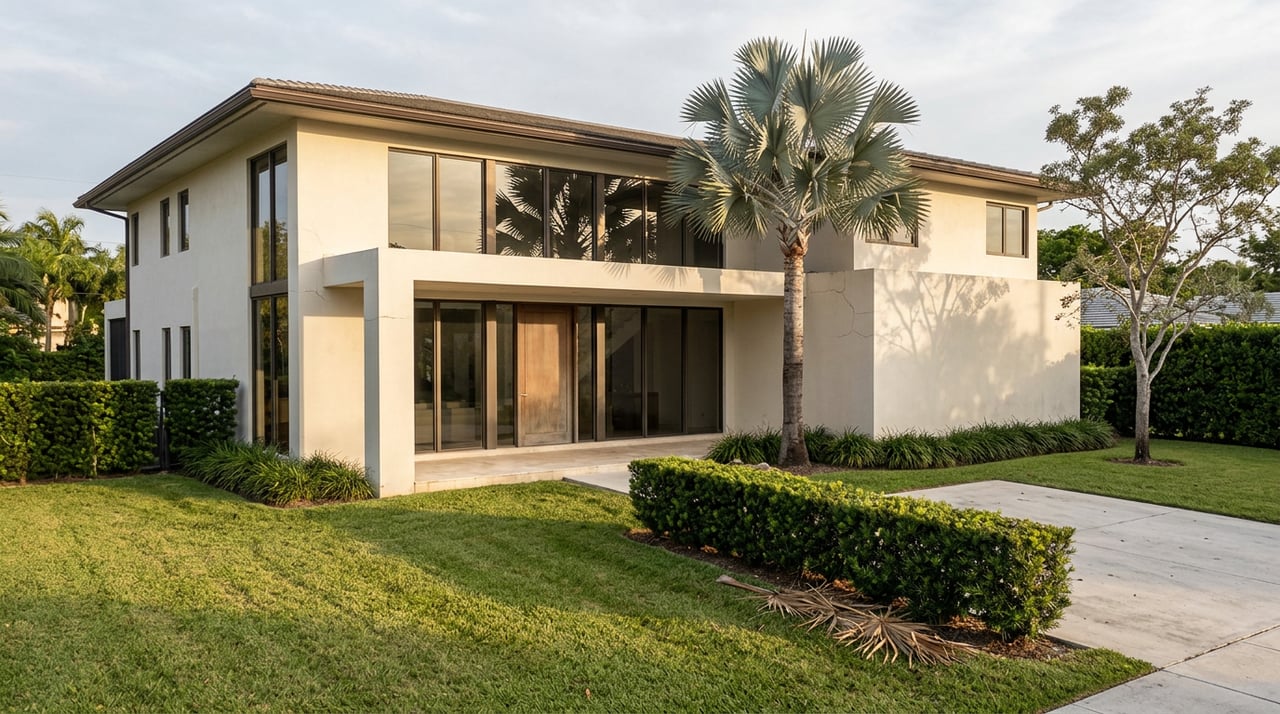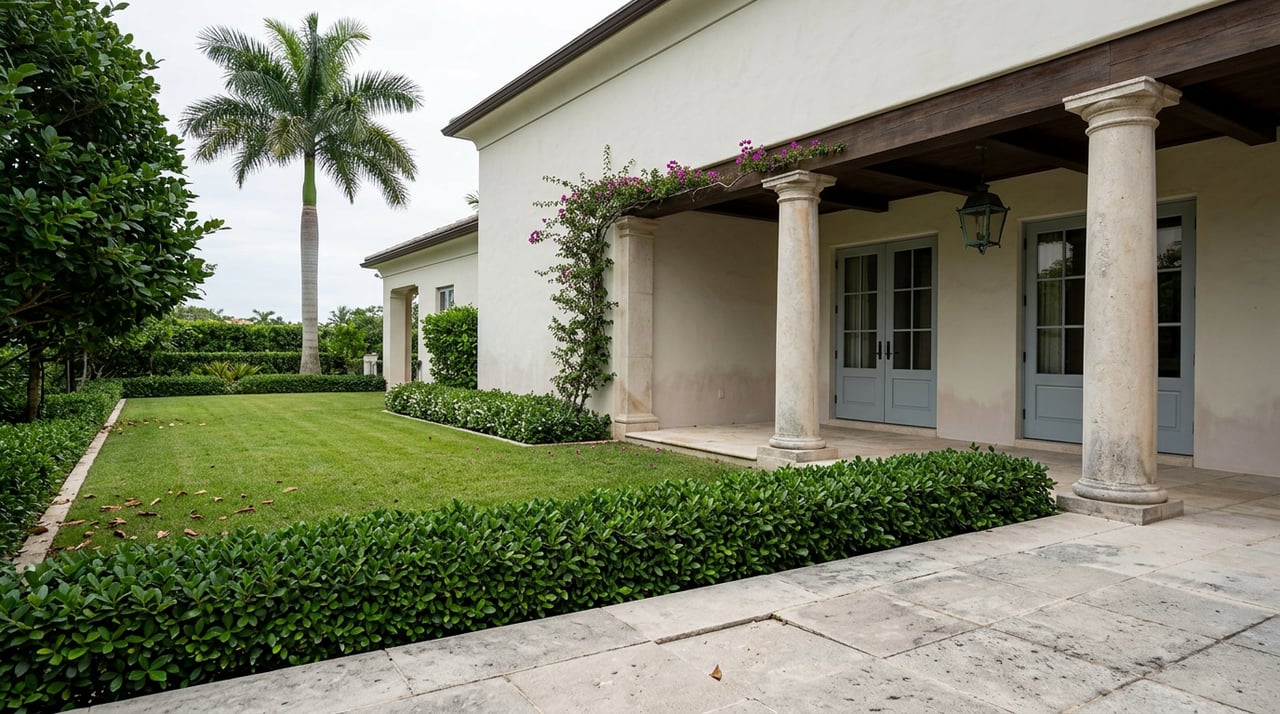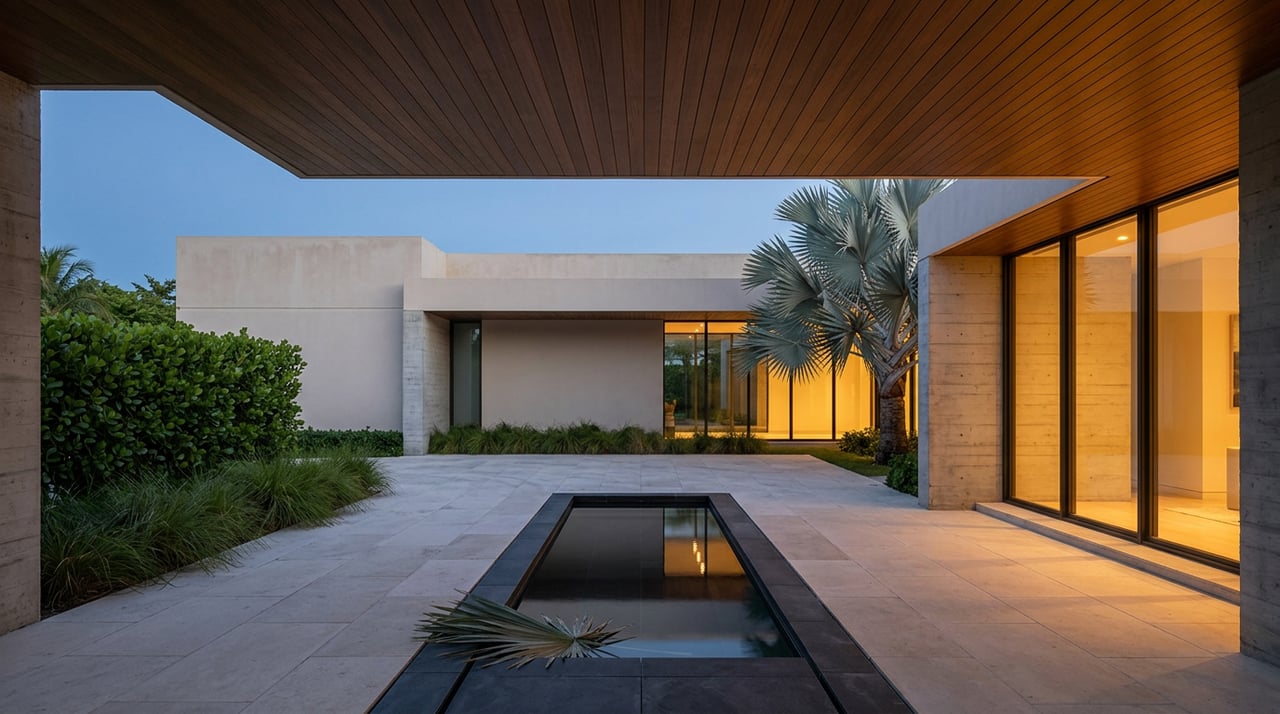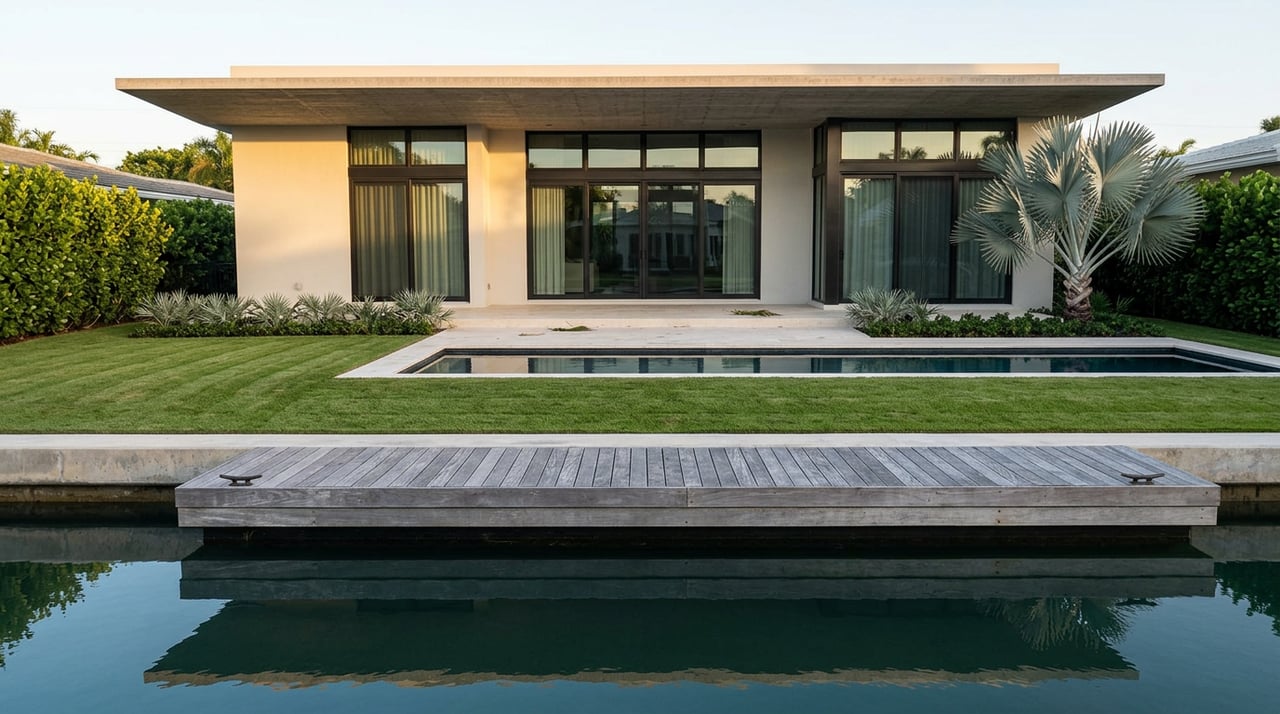
A buyer finds a canal-front home in Fort Lauderdale that checks every box. The dock is deep, the seawall looks new, the price is fair for the square footage. Then, three weeks before closing, someone finally measures the bridge between the dock and the Intracoastal. The clearance is eleven feet at mean high water. The buyer's 34-foot sportfish, with its tower folded, needs fourteen. The house is still a good house. It is no longer the house that buyer can use the way they intended to use it.
This happens often enough in Fort Lauderdale that it deserves its own line in due diligence, because the single biggest driver of value on a waterfront property here isn't the kitchen, the lot size, or even the neighborhood name on the sign. It's a number that almost never appears in the listing description: the air draft clearance of the bridge standing between that dock and open water.
The Number Most Listings Never Mention
Fort Lauderdale earned its "Venice of America" reputation with more than 165 miles of navigable canals, rivers, and Intracoastal frontage threading through the city. What the marketing rarely mentions is that more than 90 percent of those canals pass under at least one fixed bridge before reaching the ocean, and typical clearances run 12 to 17 feet. A center-console with a T-top clears most of them without a second thought. A 35-foot sportfish with a tower, or anything with an enclosed flybridge, may not clear a single one.
That clearance number does something a granite countertop never could: it sorts the entire buyer pool before a single showing happens. A property behind a low fixed bridge is invisible to anyone who owns or plans to own a real sport fisher or motor yacht, no matter how much they love the house. A property with no fixed bridge between the dock and the Atlantic is visible to that same buyer and to almost everyone else, which is precisely why it commands a different price tier even when the house itself is unremarkable.
Same City, Same Water, Ten Times the Price
This is where the price spread in Fort Lauderdale stops looking like typical neighborhood variation and starts looking like a different asset class entirely, based almost entirely on what's between the dock and the sea.
| Waterway type | What it offers | Typical price range |
|---|---|---|
| Freshwater canal or lake, no ocean access | Water view, no boat route to salt water | Roughly 15-25% above a comparable non-waterfront home |
| Canal-front with ocean access, fixed bridge(s) | Real dockage, but capped boat size and air draft | Entry-level homes well under $500,000 in some interior canal pockets, up to several million closer to the ICW |
| Canal-front or Intracoastal, no fixed bridge | Unrestricted route to the Atlantic for large vessels | Can reach the high single digits to roughly $20 million on select parcels |
| Direct oceanfront, single-family lot | Beach frontage, no canal at all | Generally $5 million and up, with essentially no ceiling on rare parcels |
The gap between the second row and the third row is the one buyers underestimate most. Two homes on the same canal system, a quarter mile apart, can differ by seven figures because one sits behind a bridge and the other doesn't. That difference has nothing to do with square footage and everything to do with who can physically get a boat to the ocean.
What the Named Streets Actually Tell You
Rio Vista, immediately south of downtown, illustrates the ceiling of this logic. The neighborhood's oldest and widest canals include a select handful of parcels with zero fixed bridges to the Atlantic, and those specific lots rarely trade. As of spring 2026, Rio Vista's median home price ran roughly $2.6 million to $3 million, a figure driven less by the historic tree canopy than by the deepwater access sitting behind it. Coral Ridge, along the Intracoastal and anchored by the Coral Ridge Country Club, carried a median closer to $1.6 million in early 2026, reflecting wide navigable canals but a more mixed inventory of dry lots and true waterfront estates.
Harbor Beach, ZIP 33316, has held the title of the city's highest-value waterfront ZIP consistently, which tracks with its position closest to Port Everglades and open water. Farther inland, canal communities like Lauderdale Isles, Avon Isles, Laguna Isles, and Bossert Isles offer genuine dockage at prices well below Rio Vista or Harbor Beach, often because more of their canal miles run behind a fixed bridge or two. None of that makes those neighborhoods lesser choices. It makes them different products aimed at a different kind of buyer, one who wants a smaller boat, a shorter commute to a marina, or simply a lower carrying cost.
Point lots deserve a specific mention here too. A point lot sits where two waterways meet, offering water on two or more sides and the wider sight lines that come with it. Isla Bahia and pockets of Rio Vista Isles hold some of the city's best examples, and they trade at a premium over interior canal lots even when the bridge situation is identical, because the visual openness itself has value independent of boat access.
The New River tells a different story from either extreme. It winds through downtown before emptying into Port Everglades, and river-front homes there deliver genuine dockage and boating access at prices generally lower than comparable ICW or premium fixed-bridge-free canal-front, largely because the urban setting trades some of the privacy that waterfront buyers elsewhere are paying for.
What Mid-2026 Data Says About Timing
Fort Lauderdale is the largest single-family ocean access segment in Northeast Broward County, which makes the broader regional read a reasonable proxy for what's happening street by street here. Reporting on the first half of 2026 put that regional ocean access market at 7.0 months of supply with a market index reading still favoring sellers, though well off the tightest pandemic-era conditions. That combination tells a buyer two things worth acting on. First, demand for genuine ocean access hasn't softened, so a well-priced, well-documented property in a no-fixed-bridge location is unlikely to sit. Second, seven months of supply is enough room that a buyer with real requirements, meaning a specific air draft or a specific dock length, can afford to be selective rather than rushing a decision on the first listing that photographs well.
That patience matters because the listing photos rarely show the thing that decides usability. A buyer serious about a canal-front home should be pulling bridge clearance data and route maps before making an offer, not after.
The Costs the List Price Doesn't Carry
Waterfront carrying costs in Fort Lauderdale run well beyond the mortgage, and they scale with the same water access variable that sets the purchase price.
- Seawall replacement typically runs $15,000 to $80,000 depending on linear footage, material, and site access, with annual maintenance closer to $2,000 to $5,000
- Dock construction or replacement generally costs $15,000 to $60,000 depending on length and materials, with routine upkeep running $1,000 to $3,000 a year
- Flood insurance under the NFIP's Risk Rating 2.0 methodology commonly runs $3,000 to $8,000 a year for a typical canal-front home, with higher figures for properties closer to open ocean exposure
A buyer comparing two homes at the same list price should treat these figures as part of the offer conversation, not an afterthought discovered at inspection. A seawall with visible cap cracking or a dock rated for a smaller vessel than the buyer intends to keep changes the real cost of ownership as much as any line item in the purchase contract.
A Short FAQ
How do I actually verify bridge clearance before writing an offer? Clearance figures are published for navigable waterways and can be confirmed against nautical charts and the relevant municipal or county records, but the safest approach is a route check that accounts for tide, since clearance is measured at mean high water and changes with the tide table on the day you'd actually be running the boat.
Why do some waterfront homes list at prices close to their land value alone? On canals with low fixed bridges or long distances from open water, the structure often contributes less to the price than the parcel itself, which is why teardown pricing shows up more often in those pockets than in no-bridge locations.
Is Intracoastal frontage always better than canal frontage? Not automatically. Intracoastal homes offer open water views and unrestricted boat access, but they also take more wake and seawall wear from passing traffic than a protected interior canal does, which is a tradeoff worth weighing against how the property will actually be used.
If you're comparing Fort Lauderdale waterfront neighborhoods and want the bridge clearance, dock condition, and seawall history pulled together before you write an offer, Engel & Völkers Fort Lauderdale can walk the comparison with you street by street.