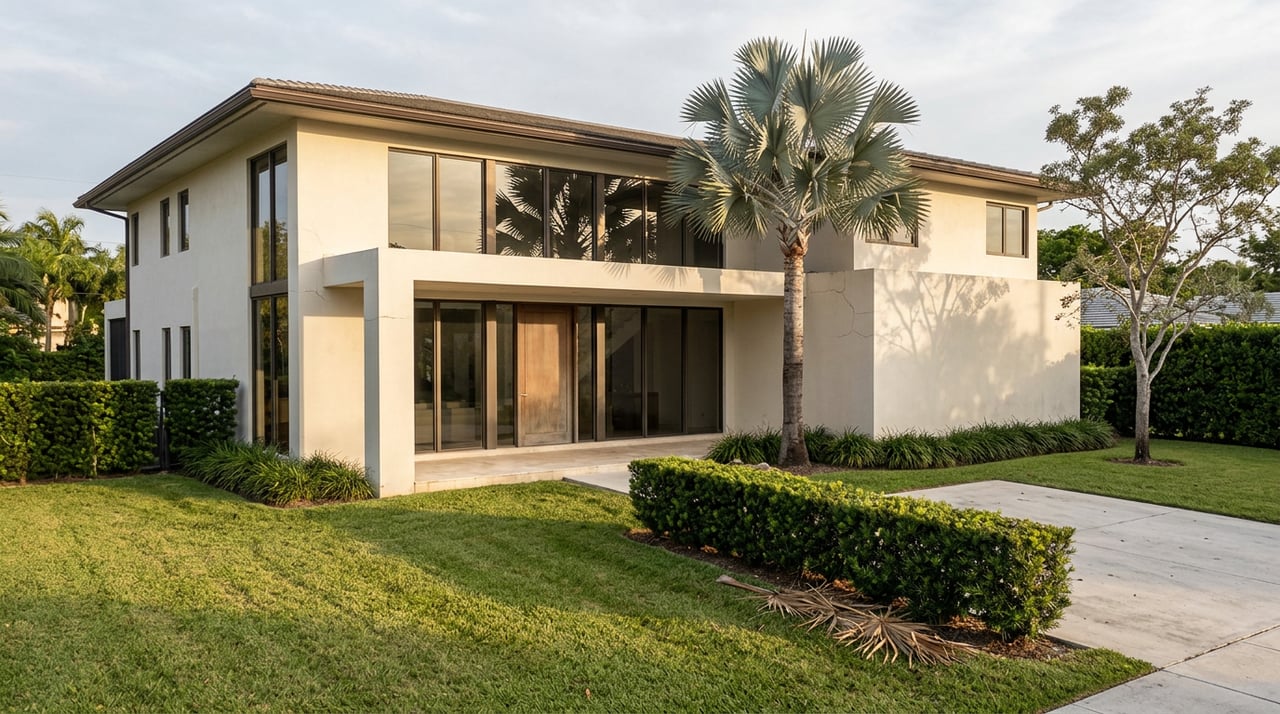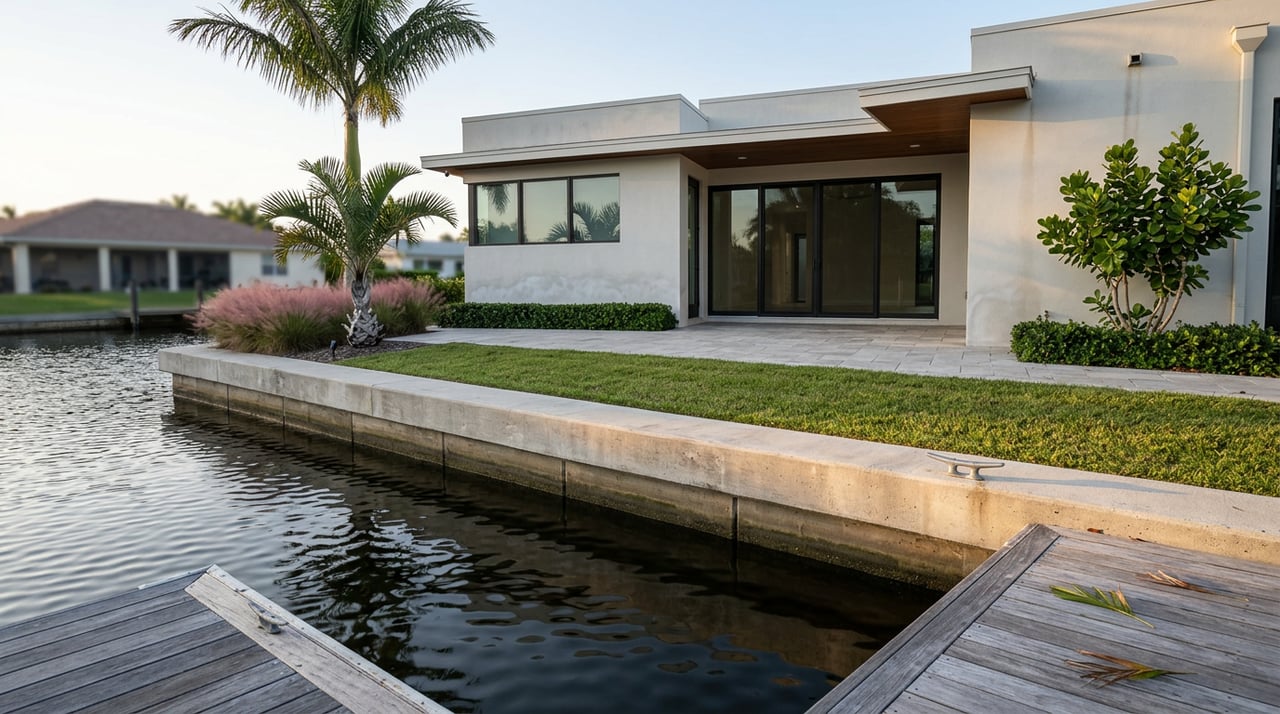
Two houses sit three doors apart on the same finger canal off the New River. Both seawalls were poured in the early 1990s. Both show the same hairline cracking along the cap that any waterfront owner in Broward County would recognize on sight. One owner patches the cracks, reseals the joints, and moves on with a repair bill under $15,000. The other owner, dealing with a section that's actually leaning, ends up replacing more than half the wall and gets handed a full elevation upgrade that costs six figures before the project is done.
Same age. Same canal. Same visible damage pattern. Completely different outcomes. The difference has nothing to do with 2035, 2050, or any date printed on a county compliance calendar. It comes down to how much of the wall each owner touched.
The Clock Nobody Reads Correctly
Most people who research Fort Lauderdale seawall rules come away with one number: 2035, the year Broward County's tidal flood barrier standard is supposed to take full effect. That date is real, but it isn't the trigger that actually determines when a given property has to comply.
Broward's resiliency code, adopted countywide under Policy 2.21.7 and written into Chapter 39, Article XXV of the county code, defines something called substantial repair. A repair crosses into that category the moment it touches more than half the linear length of a shoreline structure, or when the cost of associated work exceeds half the cost of replacing the flood barrier outright. Once either threshold is crossed, the entire wall, not just the damaged section, has to be brought up to the current elevation standard. The calendar deadline becomes irrelevant. The trigger is the scope of the work itself.
That distinction is easy to miss because it isn't intuitive. Most owners assume a repair is simply a smaller, cheaper version of a replacement. Under this code, a repair that crosses the 50 percent line legally becomes a replacement, with all the elevation obligations that come with one.
"The trigger isn't the year 2035. It's the day an owner decides to fix more than half of their wall," said Alex Ray, co-owner of the Pompano Beach marine contractor South Florida Seawall, in a June 2026 industry release on the code provision. "Once that happens, the entire seawall has to come up to code, whether they planned for it or not."
There's a second surprise buried in the same code enforcement process. If a city cites a wall as out of repair, the owner has 60 days to demonstrate progress and 365 days to finish the work. If that required fix meets the substantial repair definition, the elevation standard has to be met inside that same 365-day window, years ahead of the county's 2035 target.
Fort Lauderdale Set a Higher Bar Than Its Neighbors
The elevation number itself also varies more than most listings let on. Broward's countywide minimum is 4 feet NAVD88 through January 1, 2035, stepping up to 5 feet by 2050, and several cities in the county, from Hollywood to Deerfield Beach to Lauderdale-by-the-Sea, adopted that phased schedule as written.
Fort Lauderdale didn't. The city updated its own ordinance in 2023, raising its local requirement from 3.9 feet NAVD88 to 5.0 feet NAVD88, and it applies that number now, not on a 2035 or 2050 glide path. A new seawall, a major repair, or a fix for tidal breaching inside city limits has to hit the elevation most of the rest of the county isn't required to reach for another two decades. For comparison, Delray Beach requires new construction to reach 4.2 feet NAVD88, a full 0.8 feet below Fort Lauderdale's current minimum.
For a buyer comparing a canal-front listing in Fort Lauderdale against one in an unincorporated pocket of the county or a neighboring city on the phased schedule, the seawall isn't a like-for-like comparison even if both walls look identical from the dock.
Where the Wear Concentrates
Not every canal ages the same way. Fort Lauderdale's saltwater canal system, particularly finger canals that don't flush well with tidal movement, accelerates rebar corrosion in concrete seawalls faster than in more open waterways. Properties along the New River corridor and the Las Olas Isles tend to show that wear first, which is also where the substantial repair trigger gets tested most often.
The city and county aren't standing still on this either. Public seawall replacement and stormwater work is currently underway in Southeast Isles, Rio Vista, Bayview Drive, Bay Colony, and Hendricks Isle, running in parallel with private owners upgrading their own frontage. A buyer evaluating a home on one of these streets should treat nearby infrastructure work as context, not just background noise. It's a signal the elevation standard is actively being enforced in that specific pocket of the waterway, not merely written into a code book.
Narrow, deep lots on Sunrise Key raise a different cost issue. Tight access frequently forces contractors to barge equipment in rather than work from land, which by industry estimate adds 30 to 40 percent to the job. A property on a wide, land-accessible canal and a property on a tight Sunrise Key lot can carry very different repair economics even with seawalls of similar length and condition.
Two Disclosure Laws Are Stacked on Every Fort Lauderdale Waterfront Sale
Since December 31, 2020, any contract for real estate in a tidally influenced area of Broward County has been required to include a specific written disclosure, in bold, capitalized, at least 14-point type, stating that the property may be subject to minimum tidal flood barrier elevation standards during construction or substantial repair. That requirement sits alongside a newer, statewide obligation. Florida Statute 689.302, created by House Bill 1049 and effective October 1, 2024, requires sellers of residential property to disclose known flood damage and past flood insurance claims. A second phase that took effect October 1, 2025 extended similar disclosure obligations to condominium developers and to landlords on leases of a year or longer.
For a Fort Lauderdale waterfront closing, these aren't competing disclosures. They're two separate obligations answering two separate questions: one about the infrastructure protecting the property, one about the property's own flooding history. Skipping either one is a title and closing problem, not a paperwork technicality.
What the Numbers Actually Look Like in 2026
Cost estimates for seawall work vary by contractor, material, water depth, and site access, but the ranges quoted across Broward and Palm Beach marine contractors in 2026 cluster in fairly consistent bands.
| Scope of work | Typical 2026 cost per linear foot |
|---|---|
| Crack or joint repair | $100 to $250 |
| Cap replacement | $100 to $250 |
| Full panel and tieback replacement | $400 to $600, higher on difficult-access lots |
| New vinyl sheet pile wall | $175 to $275 |
| New concrete panel wall | $250 to $400 |
Beyond the per-foot number, budget separately for engineering plans, typically $2,000 to $5,000, and permit fees in the $800 to $3,000 range. A flat-fee structural inspection from a licensed marine contractor generally runs $1,500 to $3,000 and should be quoted before any repair estimate, not folded into it.
Permitting timelines split just as sharply. A crack injection or cap patch can clear the city's LauderBuild system in a matter of weeks. A full replacement that also requires Florida DEP review or, on New River and Intracoastal frontage, U.S. Army Corps of Engineers sign-off, routinely takes three to four months once engineering and environmental review are sequenced, and can stretch closer to a year if plans need revision. As of July 1, 2026, the city also collects initial permit fees at submission rather than after review, one more reason to have paperwork sequenced correctly before filing rather than after.
One detail that surprises even experienced owners: a replaced seawall in Broward has to include natural lime rock riprap or another approved habitat enhancement at the waterward face. It isn't an optional upgrade. Budget and dock clearance both need to account for it.
Before You Write the Offer
For a buyer evaluating a canal-front or Intracoastal property, a handful of documents turn a guess into an answer:
- A current survey with the seawall's top elevation referenced to NAVD88, not a description relative to today's tide
- A condition report from a licensed marine contractor or coastal engineer, covering cracking, leaning, cap condition, tiebacks, and soil voids behind the wall
- Copies of any past permits, repair invoices, and warranties tied to the wall
- Written confirmation of whether the wall is currently grandfathered and what would end that status
- Any open code enforcement notices or citations tied to the property
Grandfathering is not permanent. Age alone doesn't exempt a wall from the standard forever. The moment a repair crosses the substantial threshold, or a citation forces a fix, the current elevation requirement applies regardless of how long the wall has stood.
Structuring the Deal Around an Unfinished Wall
When a seawall isn't yet at the required elevation, Fort Lauderdale waterfront contracts typically use one of a few structures to keep the deal moving without either side absorbing all the risk. A price reduction equal to the estimated cost to cure, with a reasonable contingency built in, is the most common. Some sellers complete the work before closing and hand over permits and completion certificates as part of the transaction. Others use an escrow holdback, releasing funds once permitted work is finished. A time-bound contingency tied to permit or variance approval, or a negotiated cost split between buyer and seller, can also keep a deal together when the timeline is uncertain.
None of these solve the underlying question of whether a wall is compliant. They just decide who carries the cost and the calendar risk between contract and closing.
A Short FAQ
Does a small crack repair count as substantial repair? Not automatically. The threshold is defined by scope, either more than half the shoreline length or ancillary costs exceeding half the replacement value, not by the presence of damage. A contained crack or joint repair can stay under both thresholds.
If my seawall predates the ordinance, is it exempt forever? No. Grandfathering ends the moment a repair crosses the substantial threshold or the city issues a citation for disrepair. Age doesn't create a permanent exemption.
Will homeowner's insurance cover any of this? It depends on the cause. Sudden storm damage may be covered under some policies. Gradual deterioration from age or saltwater exposure typically is not.
Does this only apply to single-family homes, or do condo buildings face it too? Both. Condo and HOA boards with shared seawalls face the same substantial repair test, with the added complication of running it through reserve studies and phased capital budgeting rather than a single owner's decision.
A seawall clause looks like boilerplate until it isn't. On a canal lot in Fort Lauderdale, understanding what actually triggers full compliance, and what that means for cost and timeline, is worth doing before an offer goes in, not after an inspection surfaces it. If you're evaluating a waterfront property in Fort Lauderdale or want a clearer read on what a specific seawall situation means for your offer, Engel & Völkers Fort Lauderdale can help you work through it. Contact us.